
What is the Minimum ppm Resolution for Off-the-Shelf NDIR Methane Gas Sensors?
Minimum ppm resolution for commercially available methane gas sensors.


Minimum ppm resolution for commercially available methane gas sensors.

Monitoring of methane levels is largely driven by the range in concentration of methane you are trying to detect. Detection of methane near the lower-explosive-limit (LEL) is obvious since exceeding the LEL can be extremely dangerous. Most of the commercially available solutions focus on this methane concentration level. In this post I want to highlight some of the current options for detection of the LEL that are commercially available.

There are various methods for measuring the presence of methane gas. My favorite is the laser-based absorption spectroscopy method. That’s what my PhD is in. Sometimes though, there are simpler “off-the-shelf” methods for measuring this invisible, naturally odorless, and valuable gas resource. The table below contains a list of commercially available sensors you can use …
How to Choose an Off-the-Shelf Methane Sensor Module Read More »
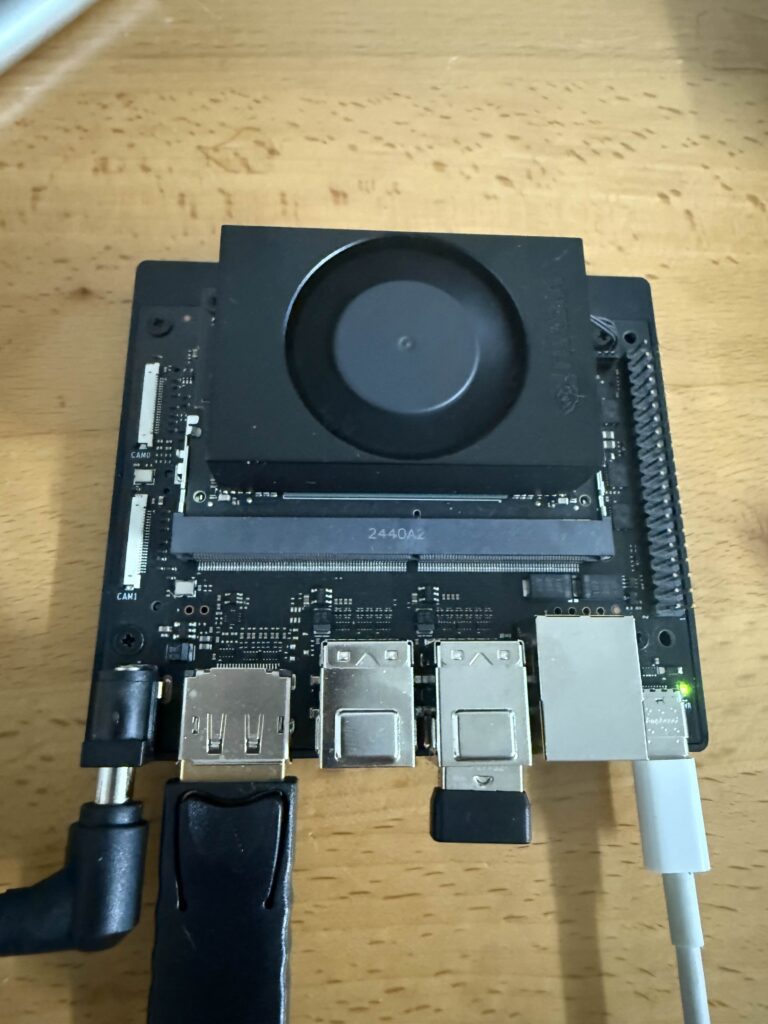
In this initial setup of the Jetson Orin Nano (henceforth Jetson), I used a Linux machine running on Ubuntu 22. I decided to run the Jetson on a Samsung 1 TB NVMe SSD and then cloned a second SSD as a backup to default to in the future as an initial configuration to start from …

TLDR: A dataset of simulated absorbance scans and a 1D convolutional neural net were used to train a model to predict methane mole fraction to within 0.25% of actual mole fraction. This provides the potential to rapidly improve data processing of TDLAS-based sensors. 1. Initial Absorbance Simulation We start with simulating methane absorbance. By using …
Using AI Tools for Measuring Atmospheric Methane Read More »

It turns out Li ion batteries (LIBs) vent TDLAS friendly gases. So I’m going to quickly break down which gases are vented and in what concentrations. This summary is focused on LiFePO4 (LFP) batteries since it seems these are the safest of the LIBs currently available. First, a little context on what causes the gas …
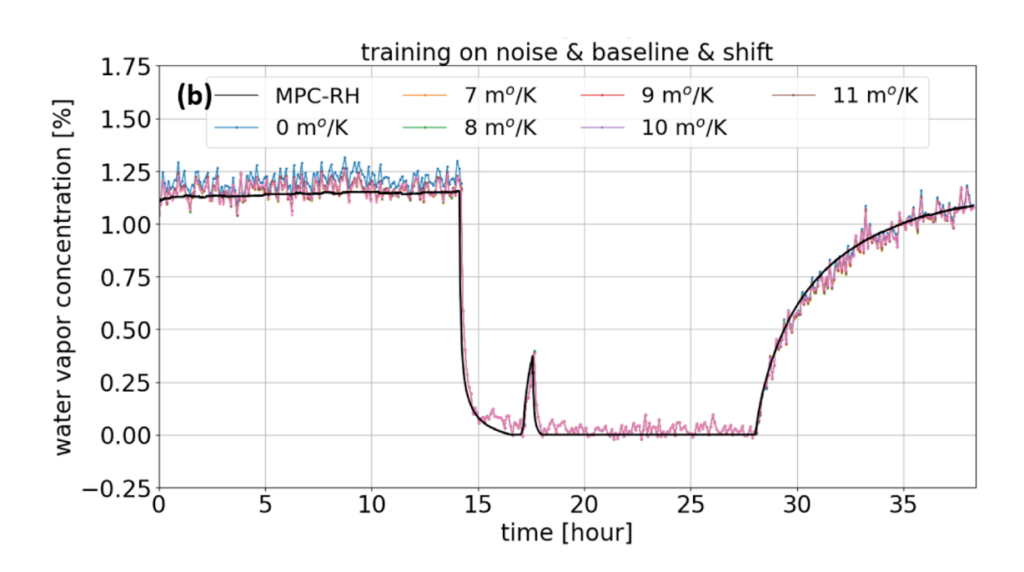
Spectrometer Steers HITRAN simulations of water and methane are used as inputs to an artificial neural network (ANN) that provides water concentration as the output. The ANN is able to correct mid-infrared (MIR) spectrometer measurements to within a margin of error of +/- 1% when compared to results from a relative humidity sensor (Bosch BME280). …
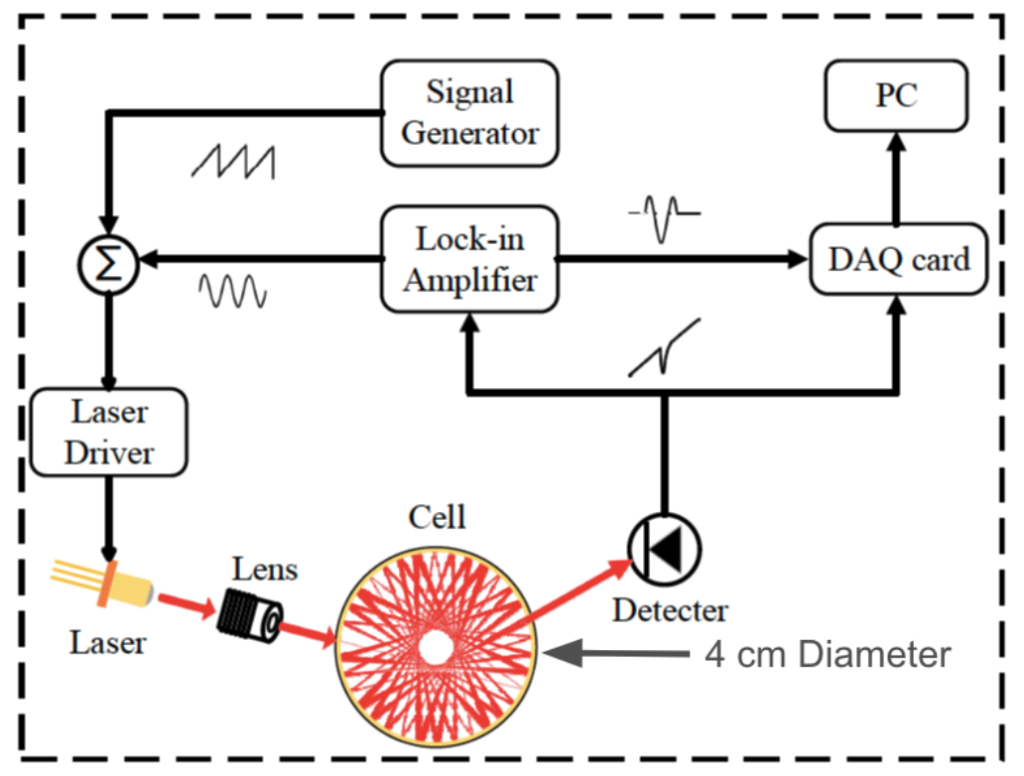
Quick Summary A TDLAS sensor incorporates a 4 cm disk to generate a 1 m pathlength and measure atmospheric oxygen levels using the 763 nm line. Researchers use a WMS-2f peak detection scheme to measure atmospheric oxygen concentration over a period of 24 hours. The VCSEL-detector package weighs 75 g and measures 90 x 40 …
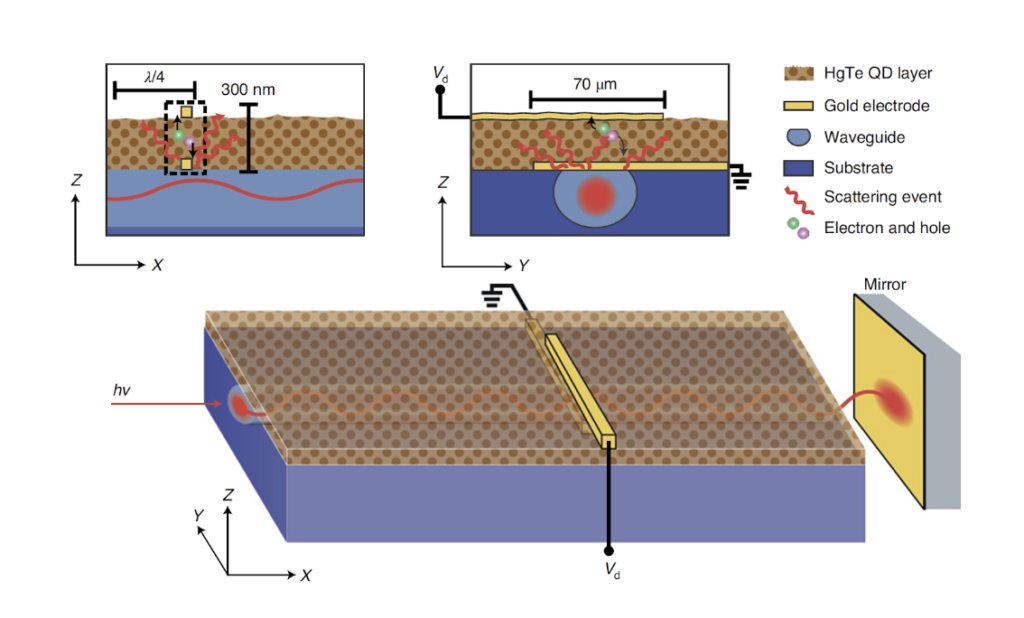
To The Point ETH Zurich led study demonstrates a room-temperature miniaturized Fourier-transform infrared (FTIR) spectrometer, 100 μm x 100 μm x 100 μm. A leaky waveguide scatters incoming light onto a near-infrared photoactive layer of quantum dots (QD). A gold mirror is displaced up to 100 μm relative to the monolithic device and results in …
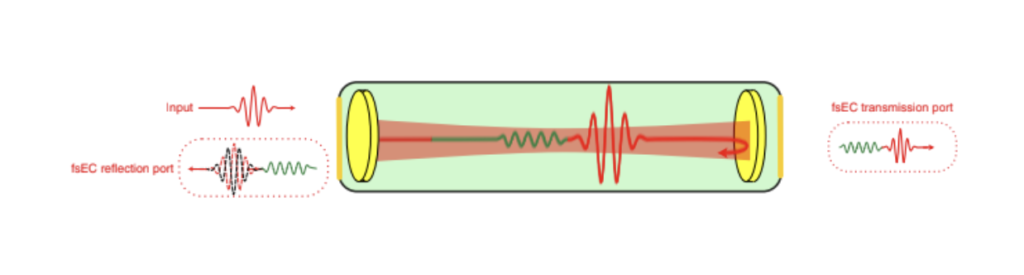
To The Point University of British Columbia led study combines ultrabroadband (~7-15 μm, 1-2 μm) frequency comb with an 81 m pathlength cavity. A wedged diamond plate is used as the input and output coupler to the cavity in contrast to the traditional use of a partially transmissive input coupling mirror. While 1 ppm methanol …
 Optimized by Seraphinite Accelerator